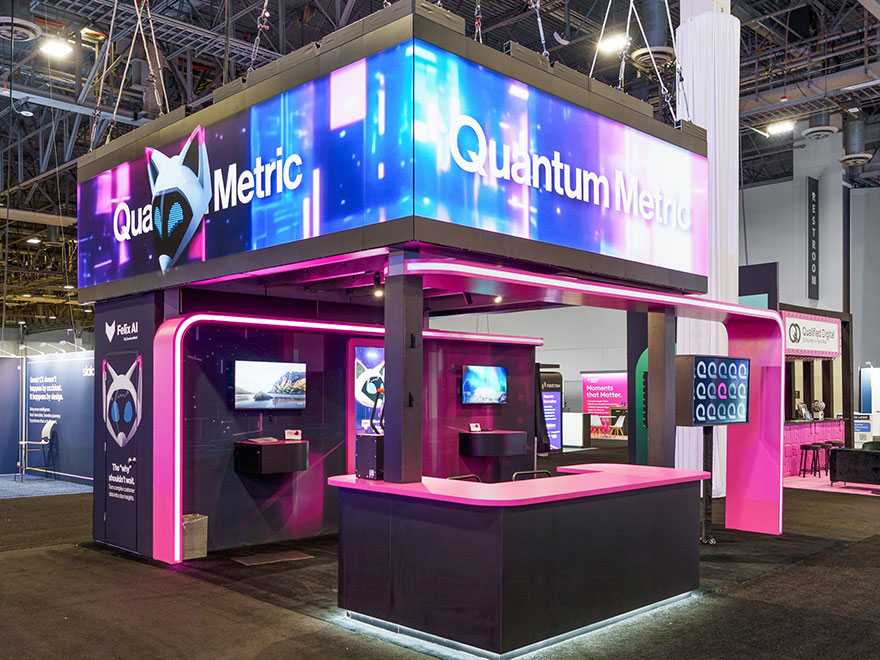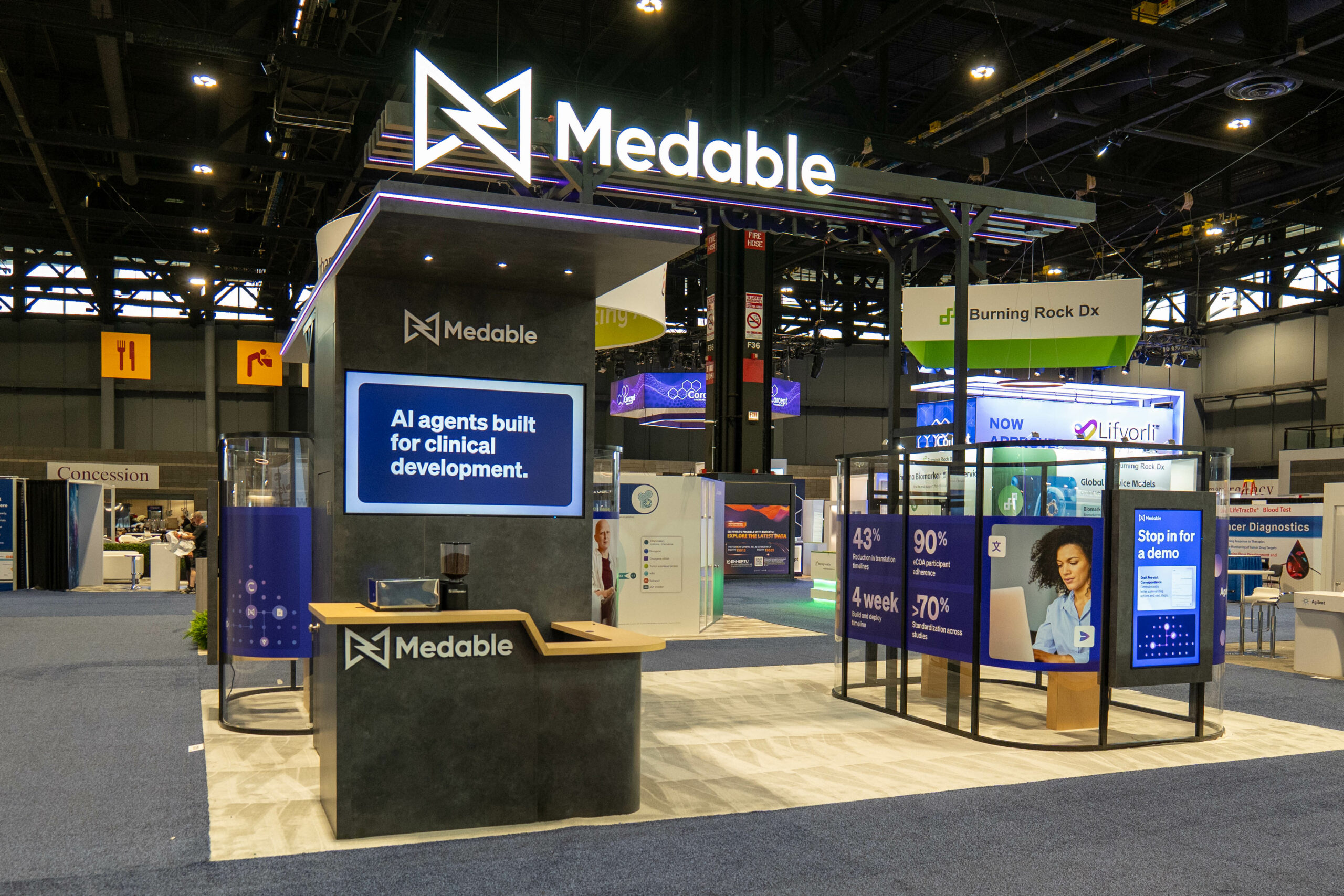
More brands are choosing trade show exhibit rentals because their show programs are changing faster than owned exhibits can keep up. Booth sizes change. Product launches shift. International opportunities appear. Marketing teams need exhibit solutions that can adapt without requiring long-term storage, maintenance, repairs, and ownership planning.
Buying still makes sense for some repeat programs, especially when a company uses the same footprint and brand environment across multiple shows every year. But for many exhibitors, renting offers the flexibility they need without the operational burden that comes with owning the exhibit asset.
A rental trade show booth is not just a budget option. It can be a strategic choice for brands that need fresh design, regional flexibility, changing layouts, and fewer post-show responsibilities.
Why More Companies Are Renting Trade Show Exhibits

Trade show exhibit rentals have become more attractive because many event programs are no longer static. A company may need a 10×20 inline booth for one show, a 20×20 island exhibit for another, and a larger flagship presence later in the year. Another company may exhibit in the U.S. in one quarter, then need an exhibition stand rental in Europe the next.
That kind of program is hard to manage with one owned exhibit.
In our experience, brands often lean toward rental when they need:
- Changing booth sizes
- Multiple shows in different markets
- New product launch support
- Campaign-specific messaging
- Lower upfront commitment
- Faster planning cycles
- Fewer storage and maintenance responsibilities
- Flexibility for overlapping show schedules
- A way to test a new market before committing long term
Renting does not mean the exhibit is temporary in quality. It means the structure, components, and design approach can be adapted to fit the show, the booth size, and the business goal.
For many marketing teams, that adaptability is the point.
Renting Gives You Flexibility Across Shows
One of the biggest benefits of renting a trade show exhibit is the ability to adjust your booth from show to show.
A company might use a smaller inline booth for a regional event, then move to a 20×20 custom rental booth for a larger industry show. Later in the year, the same company may need a larger island exhibit with meeting rooms, product displays, and more open hospitality space.
Rental makes that easier because the exhibit does not have to be built around one fixed footprint forever.
This matters when your show schedule includes different types of events. For example:
- A 10×20 inline booth for a targeted regional show
- A 20×20 island exhibit for a national trade show
- A larger custom rental exhibit for a flagship event
- A U.S. trade show booth rental in one quarter
- A rental exhibition stand in Europe later in the year
Owned exhibits can sometimes be reconfigured, but only within the limits of the original design, engineering, and stored components. Rental gives your team more room to change the structure, layout, traffic flow, graphics, and overall experience.
That flexibility is especially helpful when show schedules overlap. If two important events happen close together, relying on one owned property can create logistical challenges. A rental solution can help brands support multiple shows without forcing one exhibit to be in two places at once.
Rental Exhibits Reduce Upfront Commitment
Renting usually requires a lower upfront investment than purchasing a fully owned custom trade show exhibit. That makes rental especially useful when a company is testing a new event, launching a new product, entering a new market, or still figuring out what its long-term exhibit program should look like.
This is not just about spending less. It is about reducing commitment before the program is proven.
If a company is attending a show for the first time, it may not know whether that event will deliver the right leads, audience, sales conversations, or brand exposure. Renting allows the team to show up professionally without committing to an exhibit asset that may not fit next year’s strategy.
Rental can also be useful for product launches. A launch booth may need a specific layout, demo area, graphic treatment, or storytelling concept that only makes sense for one campaign. In that case, buying an exhibit around a short-term message may not be the best use of budget.
For companies with changing priorities, rental keeps options open.
Rental Does Not Mean Generic
RThis section is important because many buyers still think “rental” means a basic booth pulled from a catalog. That is not how a strong rental exhibit program works.
A rental trade show booth can still feel custom. The structure may be rented, but the design can be built around the brand, the audience, the product story, and the show objective.
A custom rental exhibit can include:
- Custom graphics
- Branded finishes
- Product displays
- Demo stations
- Meeting rooms
- Reception counters
- Storage rooms
- Lighting
- Hanging signs
- Digital screens
- Lounge areas
- Custom rental components
- Modular structures with brand-specific design
The difference is ownership. In a rental model, the exhibitor does not necessarily own every structural component after the show. But the experience on the show floor can still be polished, branded, and designed for the specific event.
This is especially useful for brands that want fresh creative from year to year. If your campaign changes, your graphics change, or your product focus changes, a rental exhibit can evolve with the story.
A rental booth design should still feel intentional. It should not look like a backup option.
Renting Can Simplify Storage, Shipping, and Maintenance
Owning an exhibit means managing the exhibit after the show ends. Renting can reduce that burden.
An owned exhibit needs to be stored, inspected, repaired, refreshed, packed, shipped, installed, dismantled, returned, and tracked. Graphics may need to be replaced. Damaged components may need to be repaired. Crates may need to be updated. The exhibit may need to be reconfigured before the next show.
That can be manageable for companies with a mature exhibit management process. But for lean marketing teams, it can become a lot of work.
Trade show exhibit rentals can simplify the process because the exhibitor does not need to take on the same long-term warehouse and asset management responsibility. Your team can focus more on the event itself and less on what happens to the exhibit between shows.
Rental can help reduce:
- Long-term warehouse commitments
- Post-show storage decisions
- Repair coordination
- Asset tracking
- Exhibit refurbishment planning
- The need to reuse a structure that no longer fits the strategy
This does not mean rental eliminates logistics. Every trade show exhibit still needs design, production, shipping, installation, and dismantle planning. But rental can make the overall program easier to manage, especially when the exhibit partner handles project management, graphics, shipping coordination, and I&D support.
Rental Exhibits Can Support Sustainability Goals
Rental exhibits can support sustainability goals when components are reused, repurposed, refurbished, or recycled across multiple events. The key phrase is “can support.” Renting is not automatically sustainable, and it does not eliminate waste on its own.
The sustainability value comes from how the rental program is designed and managed.
A rental exhibit may support a more circular approach when it uses:
- Reused structural components
- Repurposed exhibit elements
- Refurbished rental inventory
- Recyclable materials where appropriate
- Modular structures that can serve multiple events
- Graphics and finishes planned with waste reduction in mind
- A design approach that avoids unnecessary one-time-use production
This aligns with where the broader event industry is moving. The Event Industry CouncilSustainable Event Standardsassess events and industry suppliers across sustainability criteria, including environmental and social responsibility. The Net Zero Carbon Eventsroadmapalso points to a more circular approach for event production, including reusable items, sustainable materials, renting booths instead of building and tearing down for each event, and reducing disposable stands and production materials.
For exhibitors, this means rental can be part of a sustainability strategy, but only when the details support that goal. Ask how components are reused and what happens to graphics and finishes after the show. Also as k about whether materials are refurbished, repurposed, or recycled. Additionally, ask whether the design is being built for one event or adapted from components that can continue to be used.
A rental exhibit should not be marketed as sustainable just because it is rented. It should be evaluated based on the materials, reuse plan, logistics, production choices, and disposal process behind it.
When Renting Is Not the Best Fit
Renting is not the right answer for every company.
If your brand needs the exact same flagship exhibit environment every year, buying may make more sense. However, if you exhibit many times with the same footprint and the same layout, ownership may eventually reduce your cost per show. If the exhibit requires highly specialized custom engineering, ownership may offer more control over the final structure.
Renting may not be the best fit if:
- You need the exact same flagship environment at every show.
- You exhibit many times each year with the same footprint.
- Your exhibit requires highly specialized custom engineering.
- Full asset ownership is strategically important.
- You have a strong exhibit management process already in place.
- Repeated rental costs would outweigh ownership over time.
This is why rental should be treated as a strategic decision, not a default. The right approach depends on your show schedule, booth size, budget, brand requirements, market plans, and internal bandwidth.
Trade Show Exhibit Rental Checklist
Trade show exhibit rentals may be a strong fit if:
- You are new to exhibiting.
- Your booth size changes from show to show.
- You exhibit in multiple regions.
- You want fresh designs for different campaigns.
- You want to avoid long-term storage.
- You have overlapping show schedules.
- You are testing a new market.
- You are launching a new product.
- You want a more flexible exhibit budget.
- Your graphics or messaging change often.
- You need a U.S. booth and a European exhibition stand.
- Your internal team does not want to manage exhibit ownership.
If you checked several of these boxes, renting is worth serious consideration.
How to Choose the Right Rental Exhibit Partner
The right rental exhibit partner should do more than provide a structure. They should help you create an exhibit that fits your brand, your booth size, your market, and your show schedule.
Look for a trade show booth rental company with:
- In-house design capabilities
- A strong rental inventory
- Custom rental exhibit options
- Graphics production
- Project management
- Shipping coordination
- Installation and dismantle support
- U.S. and Europe experience
- Transparent pricing
- Experience adapting booth designs across different footprints
For international programs, regional experience matters. A rental exhibition stand in Europe may involve different terminology, venue expectations, labor models, and stand requirements than a trade show booth rental in the U.S. A partner that understands both markets can help you avoid designing an exhibit that works in one region but creates problems in another.
Also ask how custom the rental can be. Some providers offer standard packages with limited flexibility. Others can create a more custom rental booth using rental structures, custom graphics, finishes, lighting, and product-specific features.
The goal is not just to rent something that fits the booth space. The goal is to create an exhibit that supports your business objective.
The Bottom Line
Trade show exhibit rentals are not just a cheaper alternative to buying. For many companies, they are the more flexible option.
Renting can help brands adapt to changing booth sizes, new markets, international shows, overlapping schedules, fresh campaign creative, and evolving product stories. It can also reduce the long-term storage, maintenance, repair, and asset management responsibilities that come with ownership.
Buying still makes sense for some repeat programs. But if your exhibit needs are changing, rental may give your team the flexibility to build the right booth for the right show instead of forcing one owned exhibit to work everywhere.
Explore rental exhibit options that can be customized for your booth size, show schedule, and market.
FAQ
Are trade show exhibit rentals customizable?
Yes. Rental exhibits can include custom graphics, branded finishes, lighting, meeting rooms, product displays, demo areas, and custom rental components. A rental exhibit can still feel custom when the design is built around the brand and show objective.
Are rental exhibits cheaper than custom exhibits?
Rental exhibits usually cost less upfront than fully owned custom exhibits, but the best choice depends on how often you exhibit and whether your booth needs change. If you exhibit repeatedly with the same footprint, ownership may eventually make sense. If your needs change often, rental may be more practical.
Can I rent an exhibition stand in Europe?
Yes. In Europe, this is often called exhibition stand rental, stand rental, or rental exhibition stand. The right approach depends on the show, venue, country, booth size, and stand requirements.
Are rental exhibits sustainable?
Rental exhibits can support sustainability goals when components are reused, refurbished, repurposed, or recycled across multiple events. Renting is not automatically sustainable, so exhibitors should ask how materials, graphics, logistics, and end-of-show disposal are managed.
Who should rent a trade show exhibit?
Companies that exhibit occasionally, change booth sizes, enter new markets, launch new products, or want to avoid ownership logistics are often strong rental candidates. Rental can also work well for brands with international programs or overlapping show schedules.